After 8 Months in a Cardboard Box, My Cat Finally Found a Bed She Actually Loved
Editor's Note: If your living room features a dented shipping box you can't bring yourself to throw away because your cat claimed it, you're not alone. Here's why cats keep choosing cardboard—and the strange amber cave bed that finally solved it.
I am 46 years old, and for eight months, the centerpiece of my living room was an air fryer shipping box.
Three feet away sat an $85 memory-foam pet bed.
The $85 bed remained spotless. The cardboard box had chewed corners, shed paper shavings, and smelled of warehouse tape. Yet every night, our seven-pound rescue tabby, Mochi, walked past the luxury cushion, hopped into the box, and curled into a tight ball until dawn.
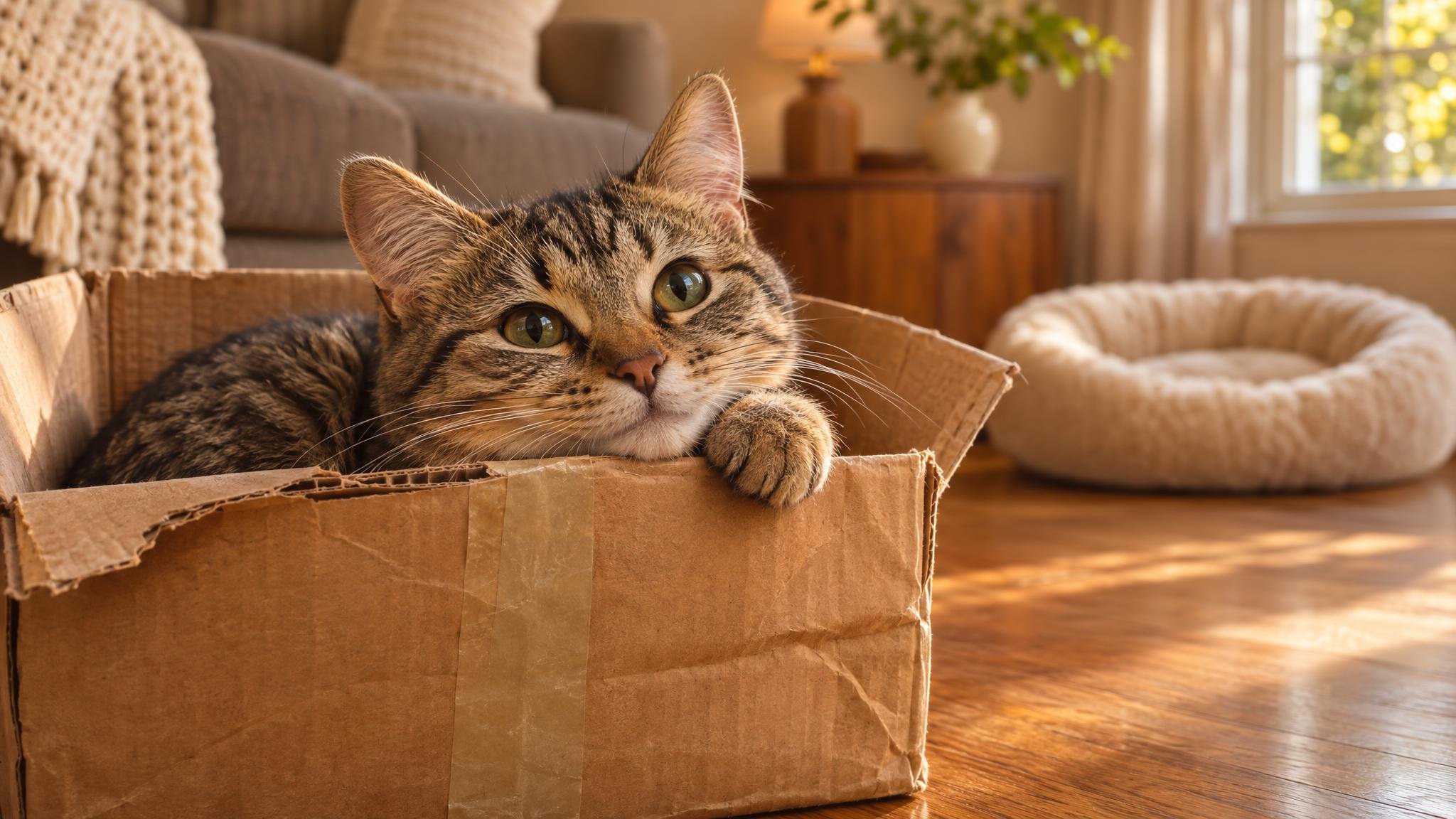
I tried sunny windows, organic catnip, and worn flannel shirts for scent. Mochi simply dragged the shirt onto the floorboards and slept on bare wood.
Whenever friends visited, I made excuses for our cardboard decor. It took a talk with my sister-in-law Sarah, a shelter foster coordinator, and an amber honey-pot cave bed to reveal why commercial cat beds fail.
The Biological Reason Cats Reject 90% of Commercial Beds
When Sarah saw Mochi curled inside the shipping box next to the empty $85 bed, she laughed.
"Marcus," she said, "you bought a bed designed for a golden retriever. Cats have completely different evolutionary wiring."
Sarah explained that pet brands routinely shrink dog cushions for cats. But dogs sleep in open packs, while cats are solitary ambush hunters. That difference dictates how their nervous systems rest:
- The 86-Degree Temperature Gap:Cats descended from desert wildcats with a comfort zone starting at 86°F. Below that, they burn calories to stay warm. In a 70°F room, an open cushion bleeds heat away like an uninsulated tent.
- The "Ceiling Rule" and Sentry Sleep:Cats are both hunters of mice and prey to owls and coyotes. Open beds leave their back and overhead exposed, keeping them in light sentry sleep where ears twitch at every sound. They need overhead cover to enter deep, restorative REM sleep.
- Peripheral Touch (Thigmotaxis):Felines possess an instinctive reflex called thigmotaxis: a calming sensation triggered when physical boundaries press against their flanks and spine, mirroring the kitten nest. That is why they wedge into tight bowls and shoeboxes.
"Cardboard satisfies that shape," Sarah told me, "but it is freezing on bare floors, collects litter dust, and sheds paper mess. Cats do not love cardboard. They love the enclosure: a warm, private cave with a roof, soft walls, and a doorway they can defend."
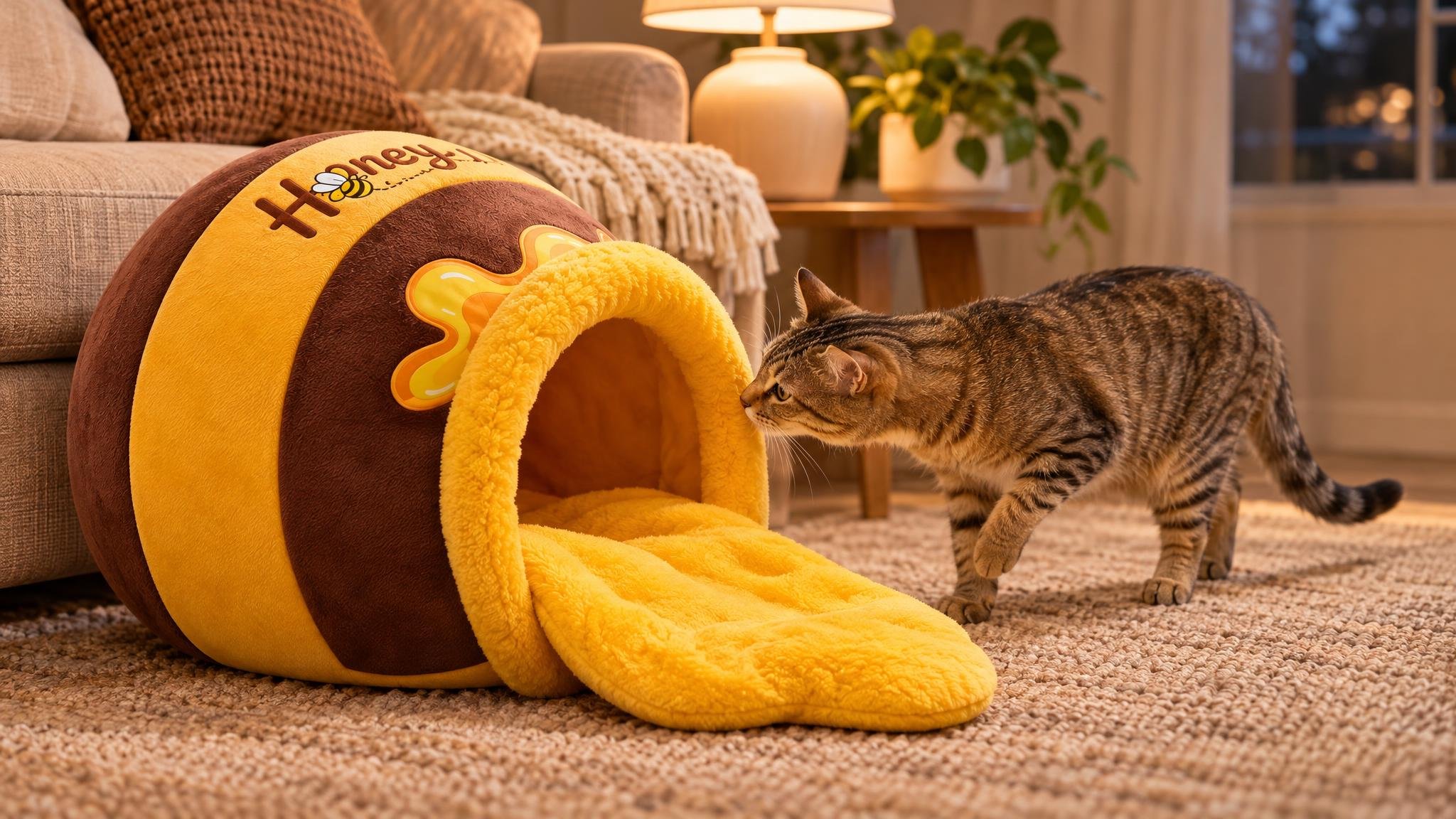
She recommended the Esslyn™ HoneyNest Calming Cave.
The Direct Comparison: Traditional Beds vs. Cardboard vs. HoneyNest
| Feature | Standard Open Donut Bed | Raw Cardboard Box | HoneyNest Calming Cave |
|---|---|---|---|
| Overhead Protection | None (Exposed to room drafts and ceiling) | Partial (Depends on flap position) | 360-Degree Structured Dome Canopy |
| Thermal Performance | Heat bleeds out into 70°F room air | Cold floor drafts penetrate bottom | Traps Body Heat at 85°F to 90°F (Zero Power) |
| Physical Wall Support | Soft bolsters collapse under pet weight | Stiff, unpadded cardboard edges | Reinforced High-Density Structured Foam |
| Acoustic & Glare Shield | Zero sound or light dampening | Minimal acoustic buffering | Filters Glare & Muffles Sharp Room Noises |
| Hygiene & Maintenance | Clumps and deforms in washer | Cannot be washed, collects mold & mites | Removable Machine-Washable Inner Cushion |
| Floor Stability | Slides across smooth hardwood floors | Slides easily when cats pounce | Heavy-Duty Base with Silicone Grip Beads |
| Living Room Aesthetic | Generic, accumulates loose hair | Looks like trash from a delivery | Charming Honey Jar Design in Warm Amber |
The Physical Engineering of the HoneyNest Cave
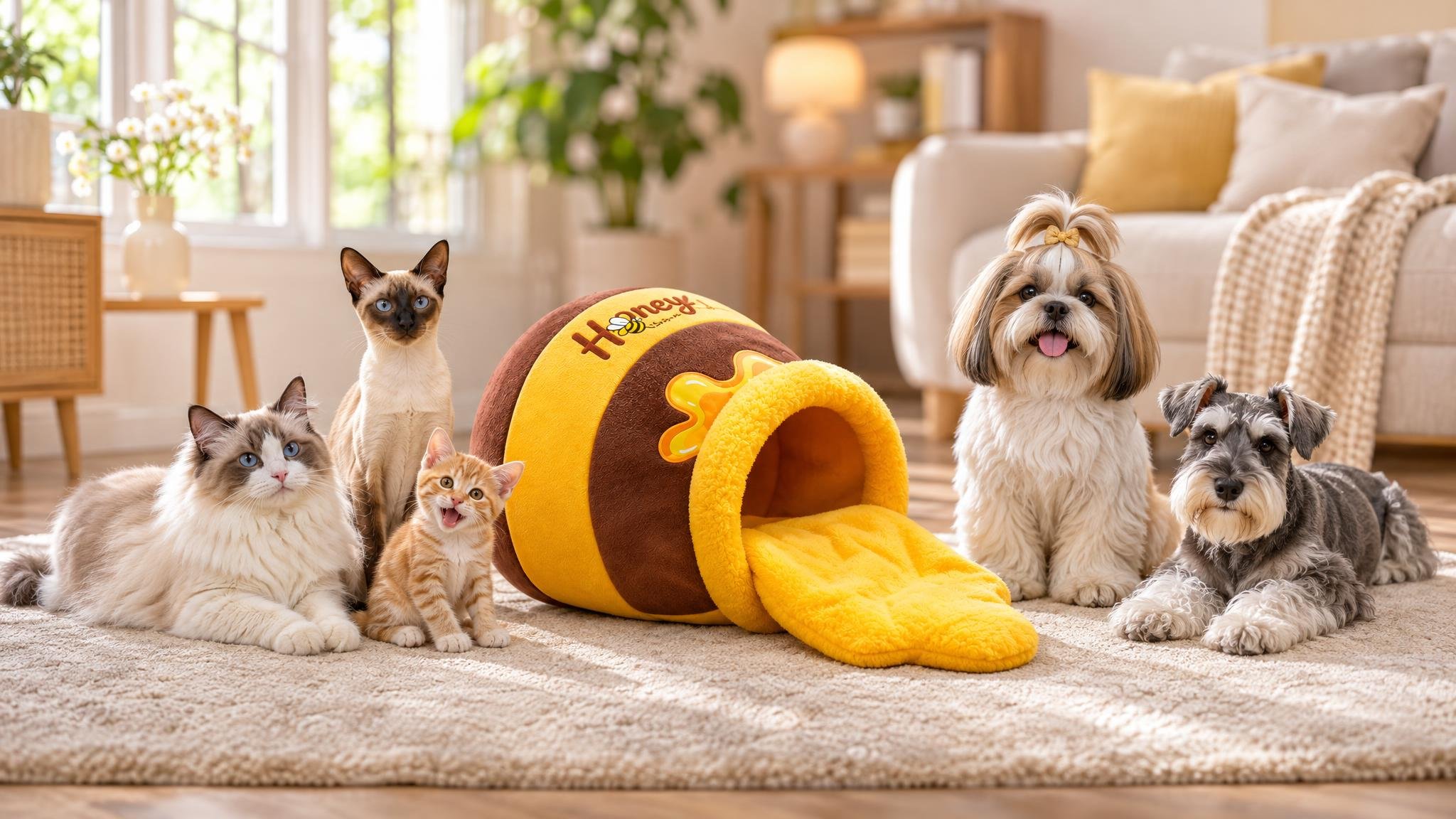
When the package arrived, I was amused by the exterior. It is shaped like an amber honey pot with a rounded dome and an embroidered front label. Once you inspect the build, however, the functional engineering stands out:
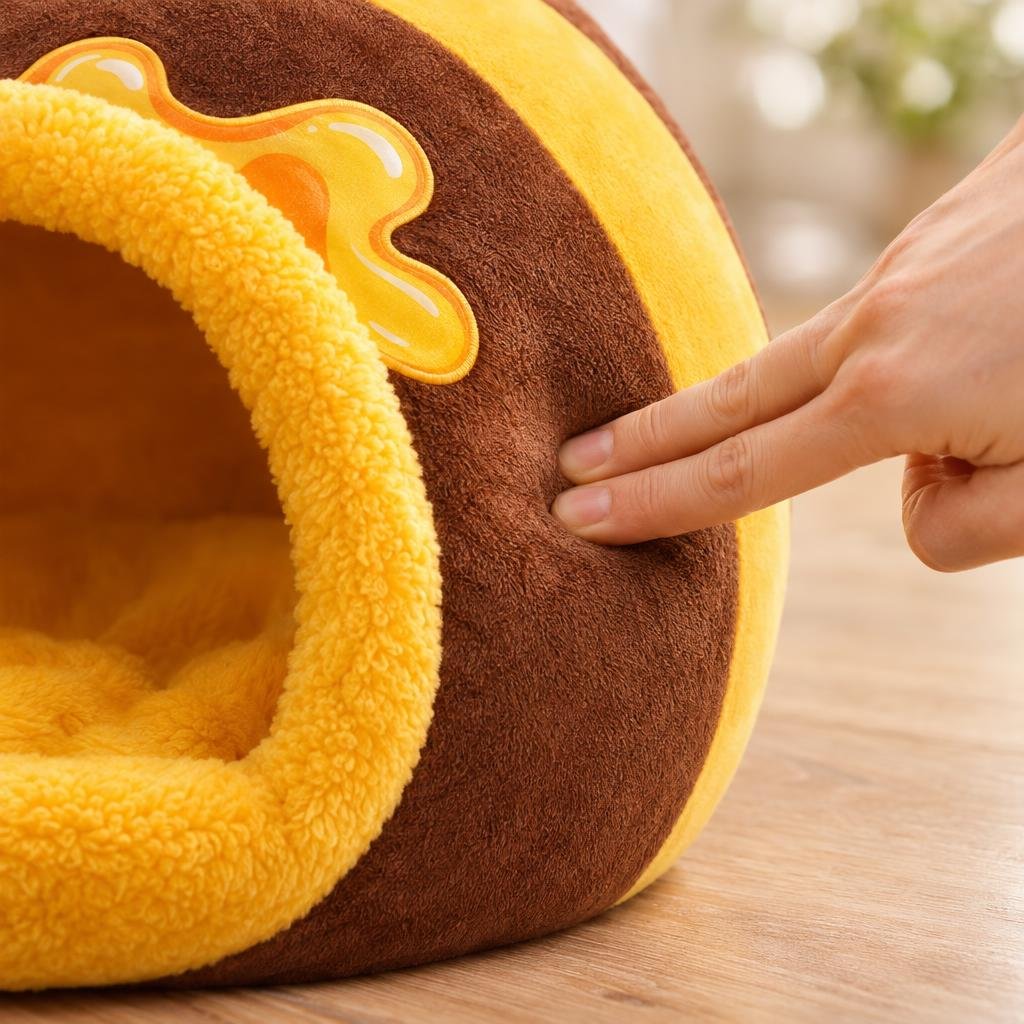 Anti-Collapse High-Density Foam:
Reinforced foam panels hold a rigid dome without buckling, giving cats the firm wall resistance needed for calming thigmotaxis.
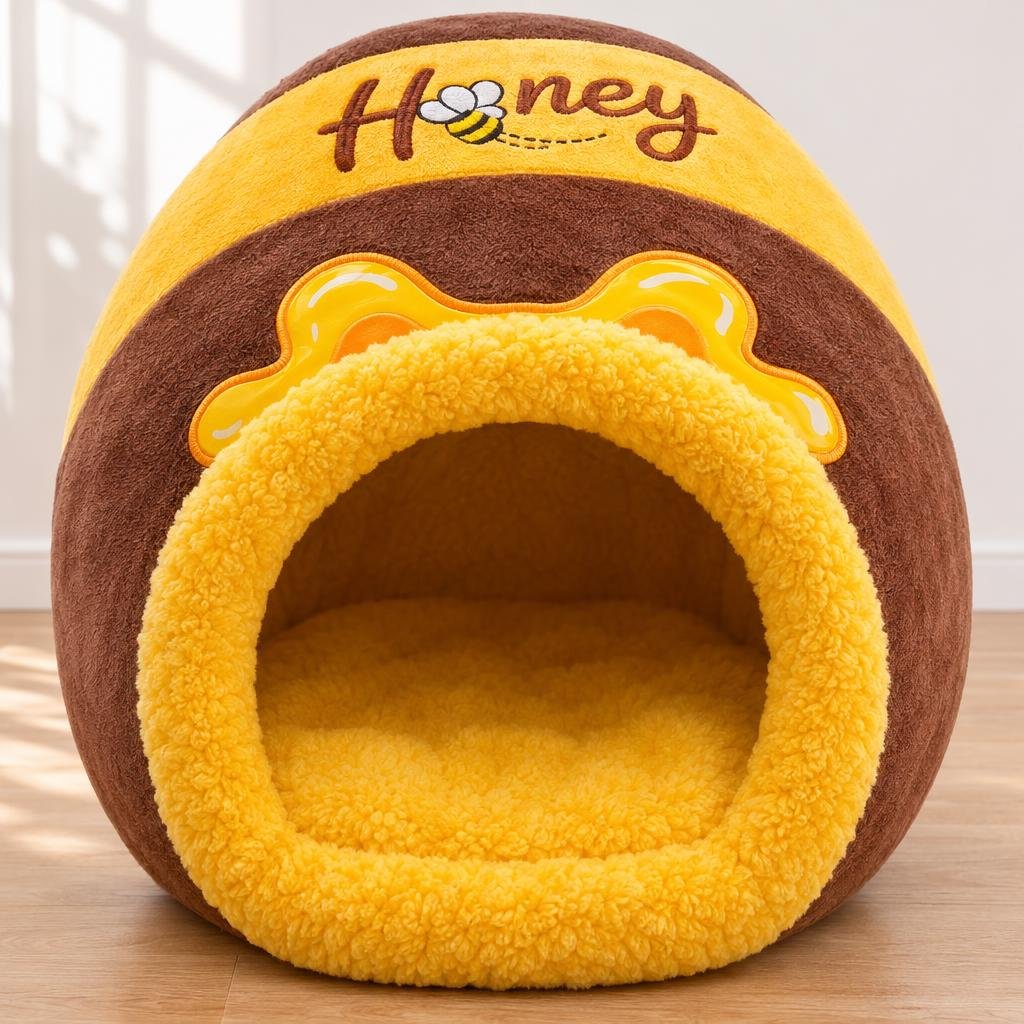 Thermal Baffle Entryway:
The 10.2-inch arched entry blocks floor drafts while leaving a secure vantage point for your cat to survey the room.
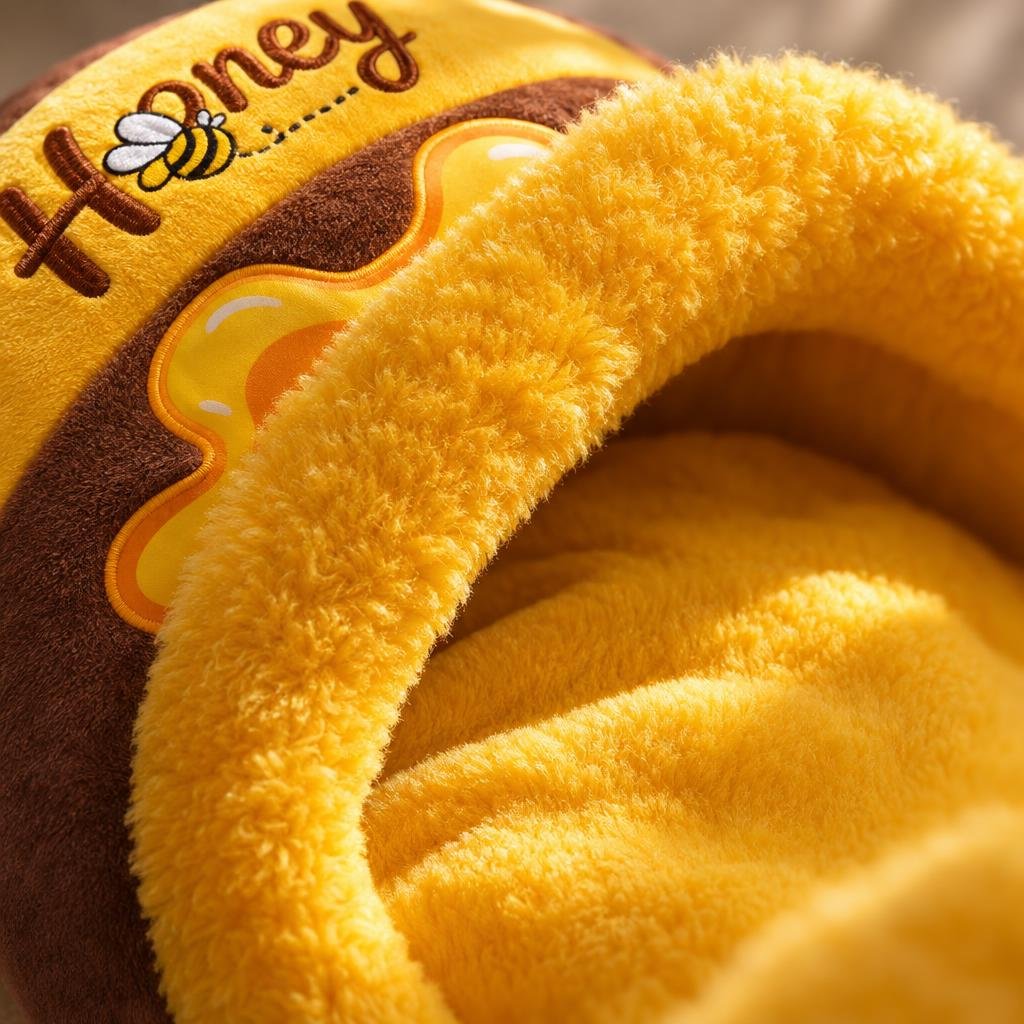 Heat-Reflecting Micro-Plush:
Thick fleece traps radiant body heat, maintaining an 85°F to 90°F microclimate without electrical cords, batteries, or fire hazards.
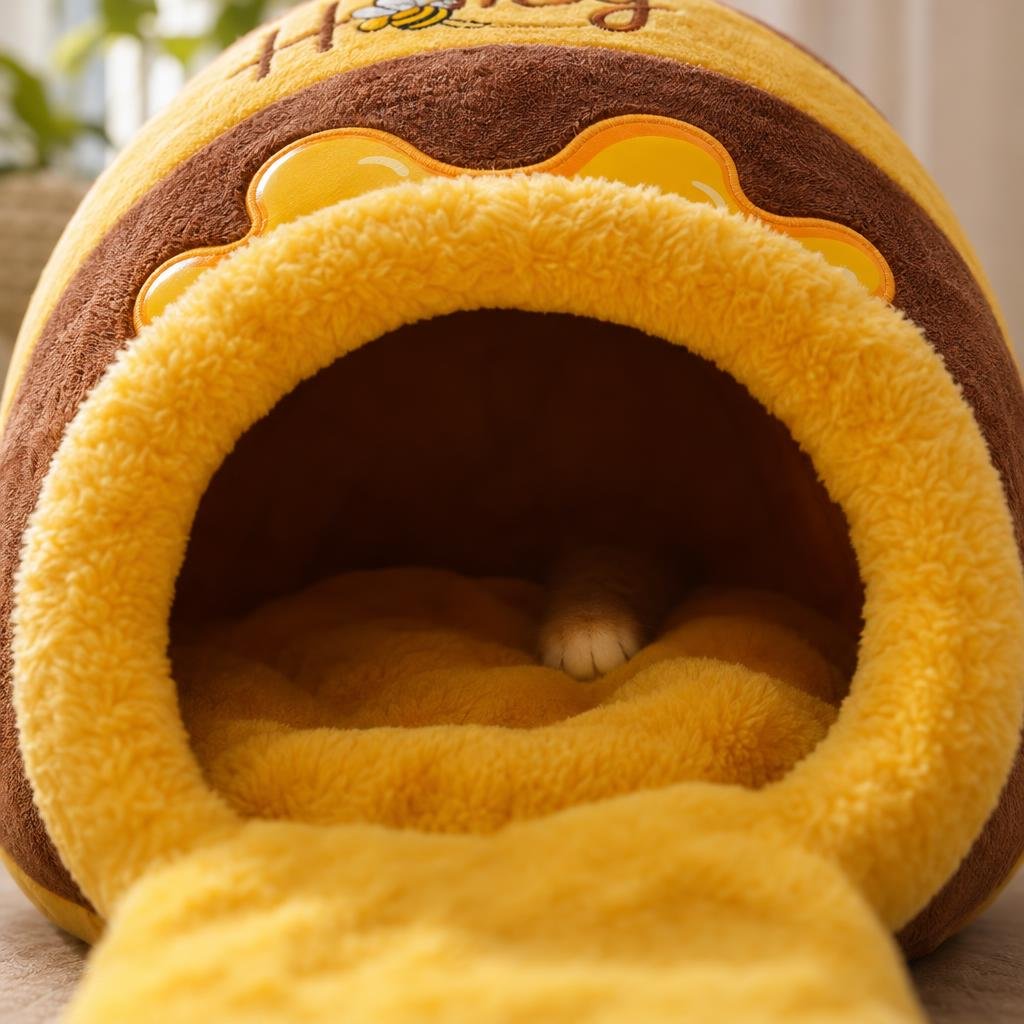 Acoustic and Light Dampening:
The domed canopy absorbs harsh lighting and muffles sudden household noises (appliances, footsteps, televisions) by up to 40%.
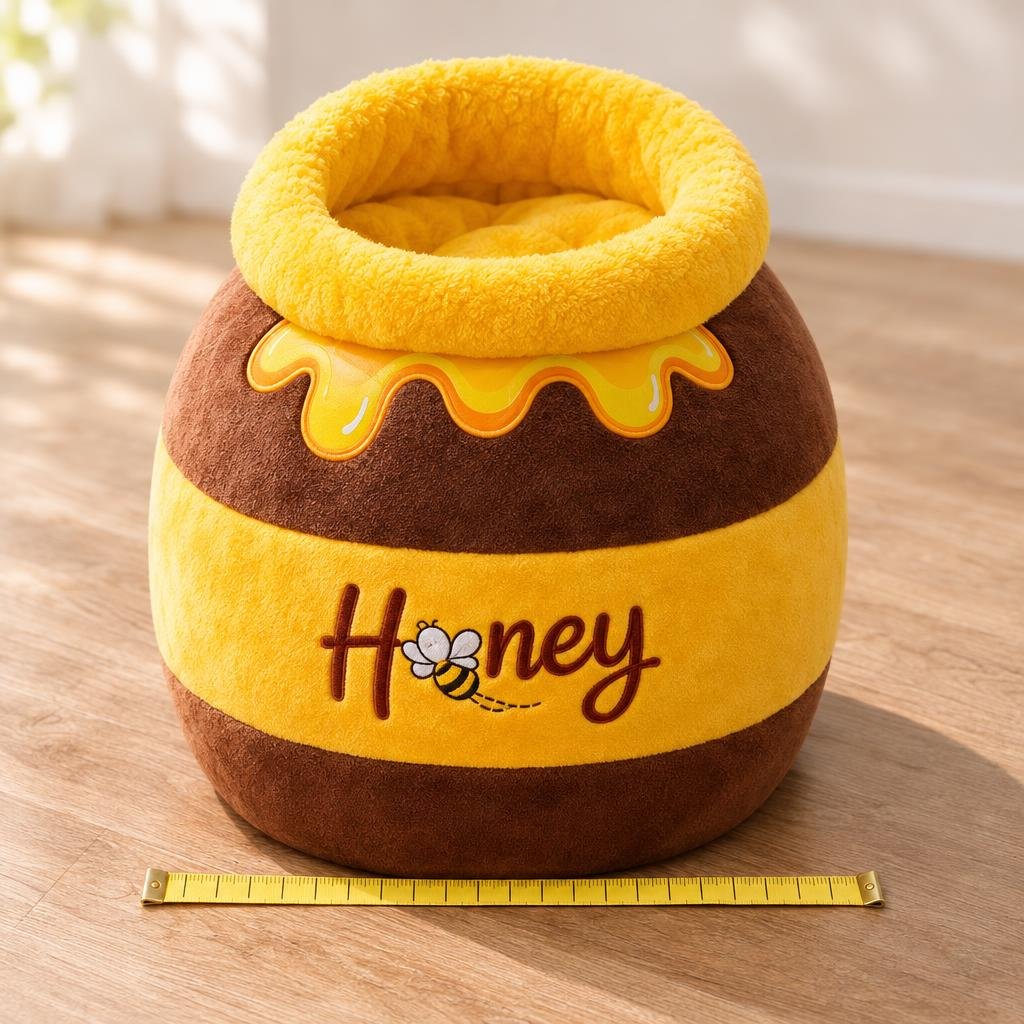 Calibrated Feline Dimensions (22.0 in Length, 9.4 in Height):
Engineered specifically for cats up to 11 lbs. The 12.6-inch body depth ensures soft fleece walls make continuous contact with their flanks and spine.
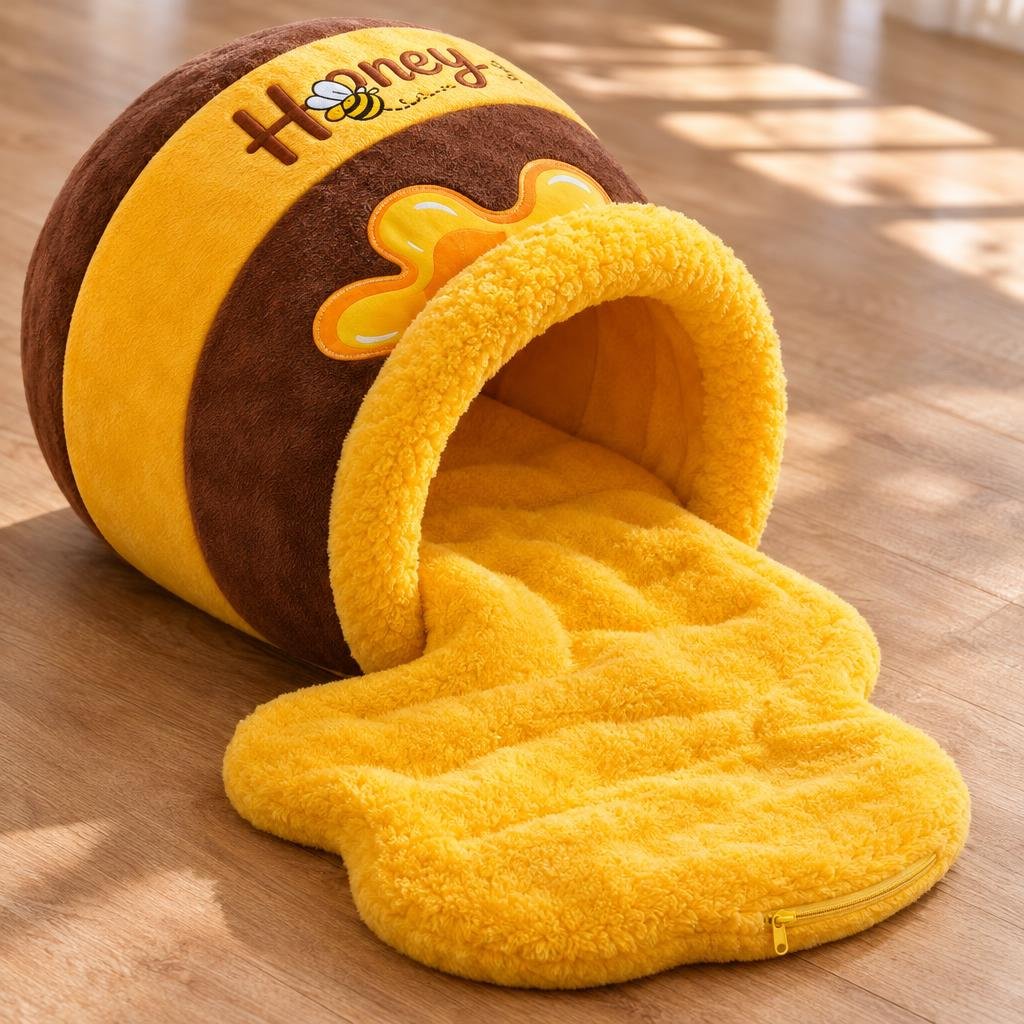 Modular Washable Cushion:
Inner pad unzips in seconds for cold machine washing, eliminating dander, dust mites, and odors.
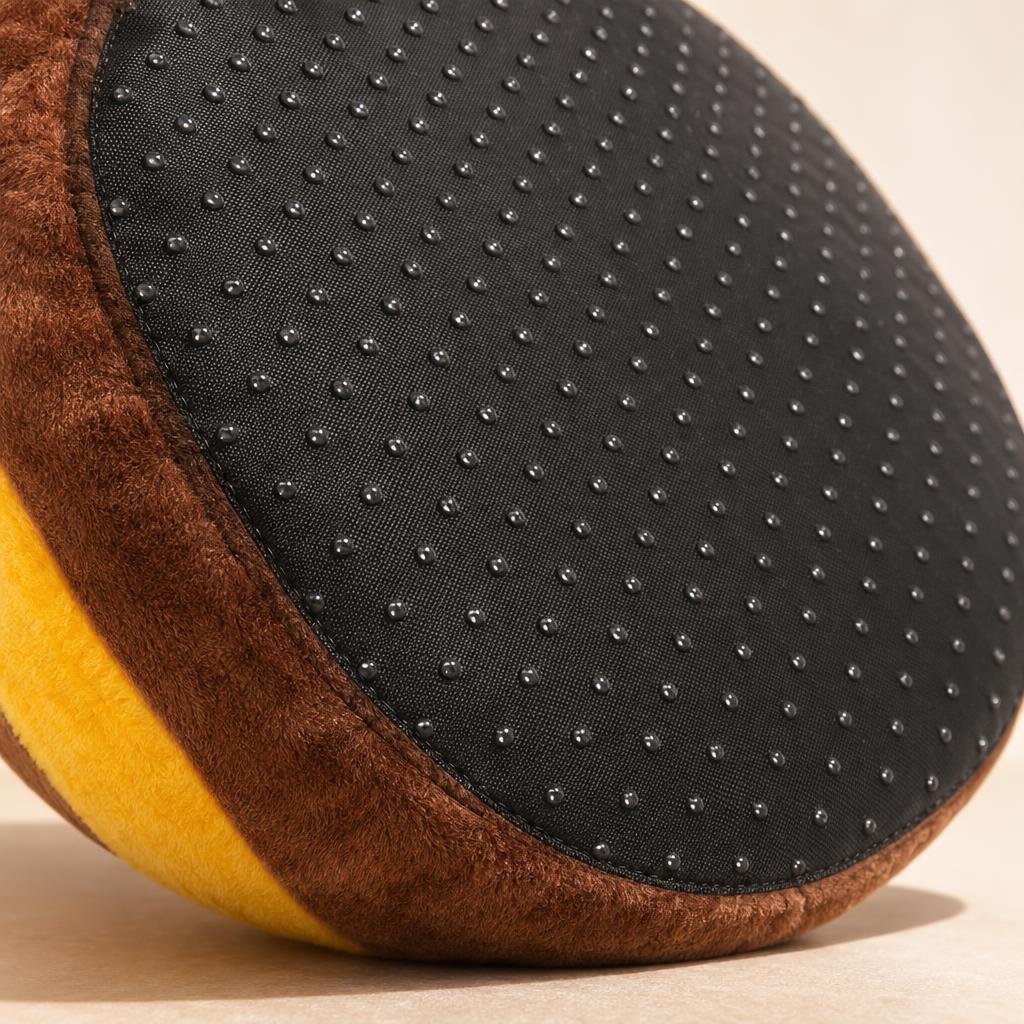 Non-Slip Silicone Base:
Heavy-duty oxford base with silicone grip beads anchors firmly on slick hardwood or tile.
The First Evening—and Nine Weeks Later
The night the HoneyNest arrived, I finally carried our ragged cardboard box to the recycling bin and set the amber cave down in its old spot on the rug. I didn’t coax Mochi inside. I simply sat on the sofa and let her decide.
Six minutes later, she was investigating the doorway. A moment after that, she stepped inside, turned around, and settled with her nose peeking out. Then came something I’d never seen on her $85 bed: both paws kneading the fleece cushion, a loud, steady purr, and eventually her chin resting against the soft entrance as she drifted off.
Twenty minutes later, the refrigerator ice maker clattered. Mochi barely stirred.
Nine weeks on, the difference is less dramatic but far more meaningful in everyday life. Our living room no longer revolves around a battered shipping box, and Mochi has a quiet retreat when company comes over or the house gets noisy. She still enjoys her cardboard adventures, of course—but now, when evening settles in, she often makes her way back to her cave.
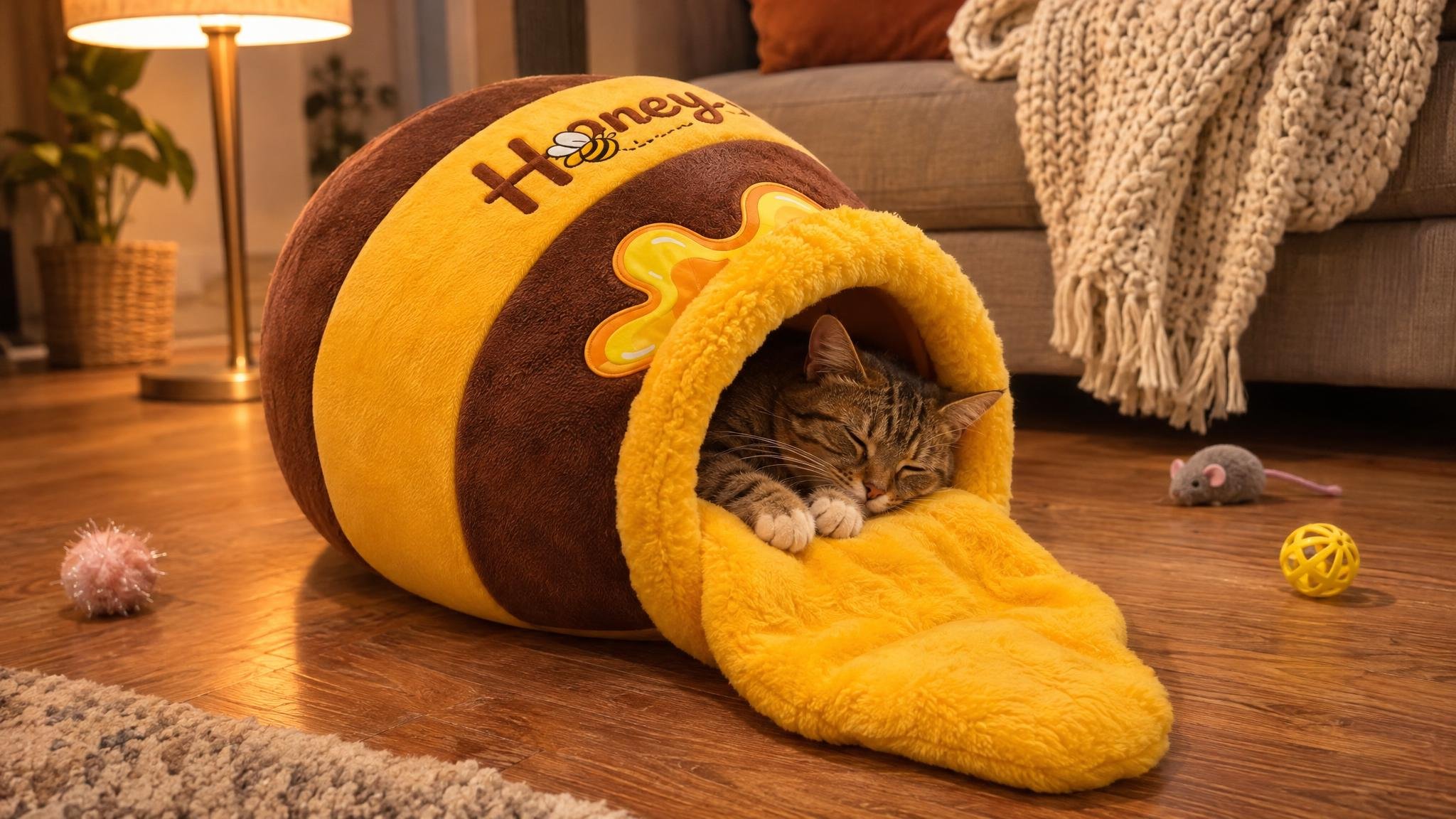
Sometimes she emerges a little later, stretches beside the sofa, and curls up next to me.
That’s the change I appreciate most. I didn’t need to teach her to love a new bed. I just needed to give her a place she was happy to return to.
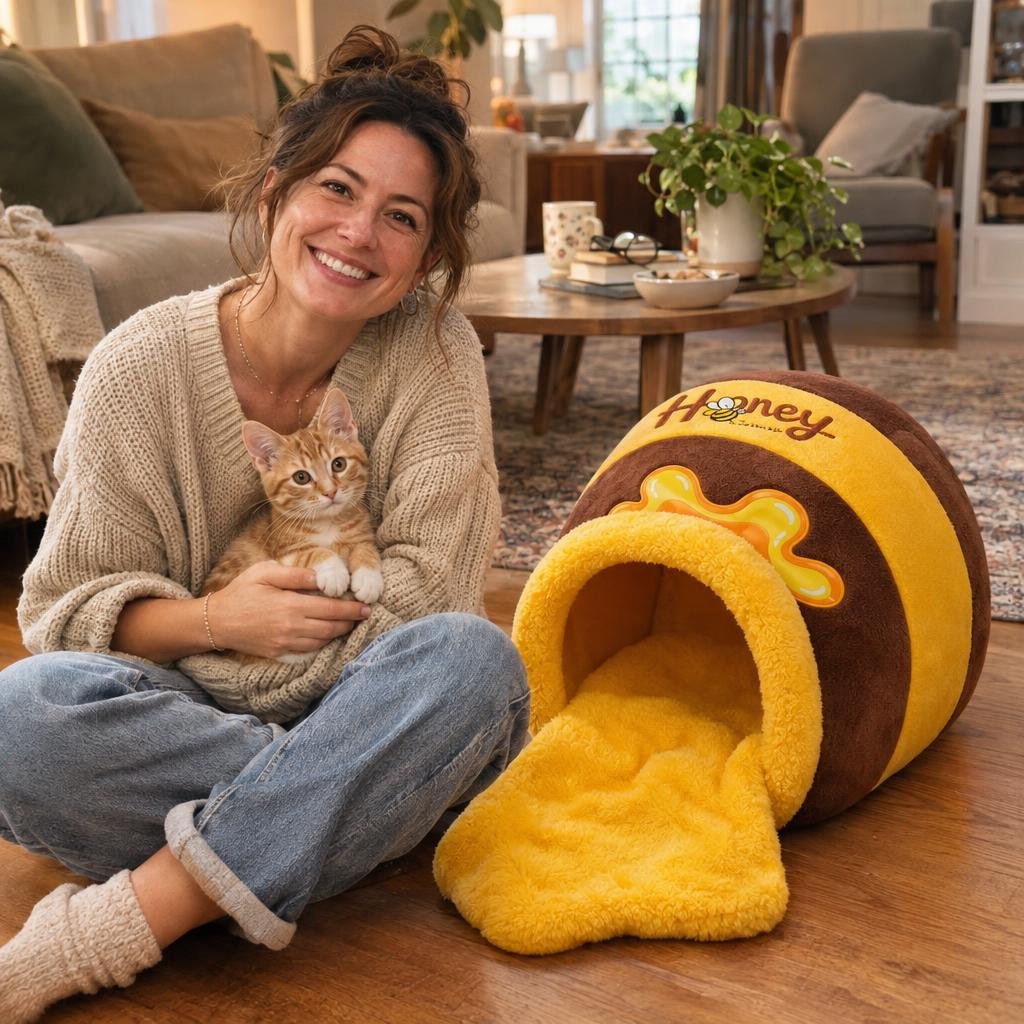
My six-month-old kitten ignored two store beds. She crawled into this honey jar cave within ten minutes of unboxing. It is the only spot she sleeps now.
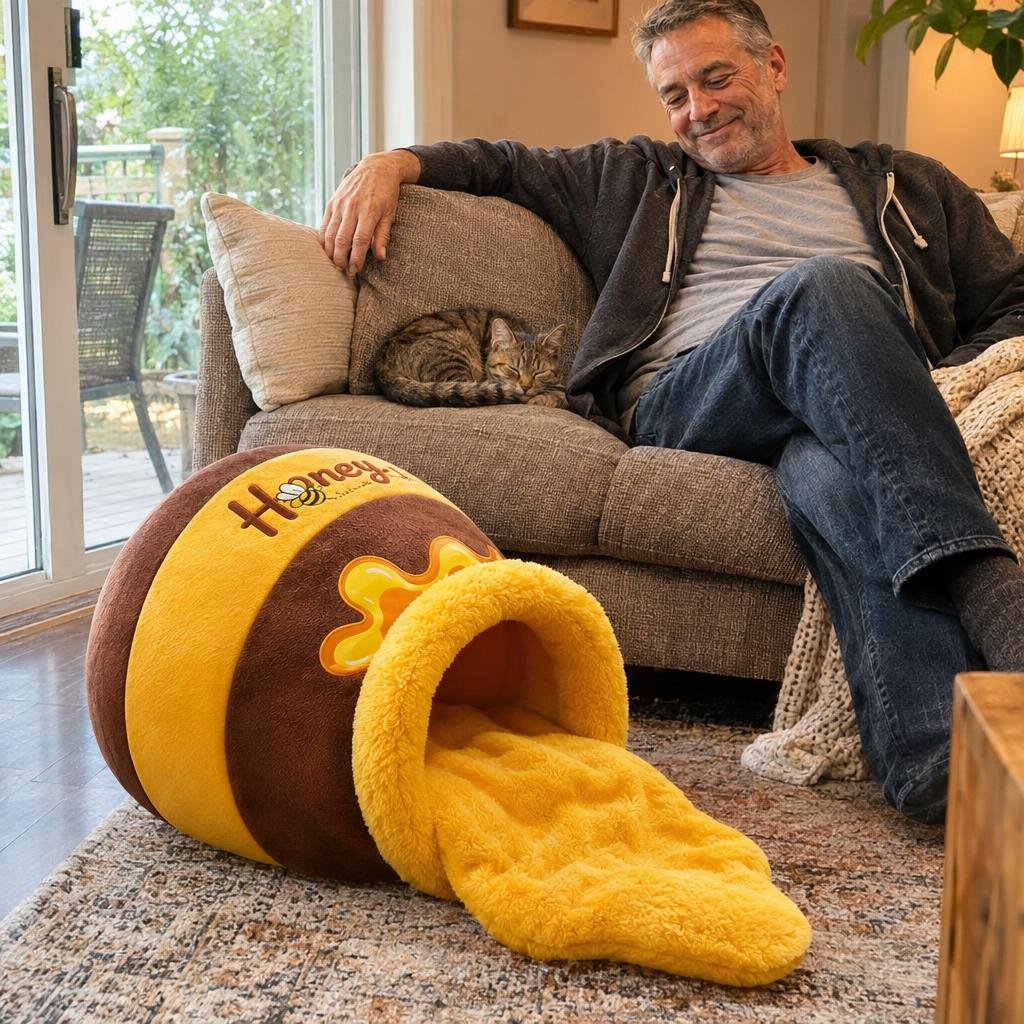
My rescue tabby is under seven pounds and always shivered near our patio door. The bed fits her like a glove, and the fleece holds her body heat remarkably well.
Product Specifications & Exact Dimensions
The HoneyNest Calming Cave is built as a single, calibrated model specifically designed for cats and kittens up to 11 pounds (ideal for Siamese, Abyssinian, Devon Rex, rescue kittens, and domestic shorthairs):
- Overall Length:
- 22.0 inches (56 cm)
- Overall Height:
- 9.4 inches (24 cm)
- Main Cave Body Length:
- 12.6 inches (32 cm)
- Arched Entryway Width:
- 10.2 inches (26 cm)
- Weight Capacity:
- Best for cats up to 11 lbs
This dedicated geometry ensures that when your cat curls up, the soft fleece walls make continuous contact with their spine and flanks, providing the exact perimeter boundary needed to settle their natural sentry alertness.
How to Introduce the HoneyNest to a Skeptical Cat
Shelter fosters recommend this simple three-step protocol:
- Place It Where the Box Was:Set the HoneyNest in the exact quiet corner or spot where your cat already prefers to sleep.
- Zero Pressure:Never force your cat inside. Felines reject territory that feels forced. Let her explore on her own timeline.
- The Scent Anchor:Place a familiar toy or a worn cotton sock inside the cushion for the first 24 hours to signal immediate safety.
Direct Sponsor Promotion & Ironclad Guarantee
TopGadgetlife currently offers a direct reader promotion:
- Direct Sponsor Discount: $59.99 USD (Save $40 from standard $99.99 retail).
- Tracked US Priority Shipping: Fast dispatch with tracking numbers sent directly to your email.
- The 30-Day "Sniff Test" Guarantee: Test the HoneyNest for 30 days. If your cat does not claim it as her favorite sleeping spot, return it for a complete refund with zero hassle.
If you are tired of wasted pet beds and cardboard clutter on your rugs, this is the scientifically grounded upgrade your cat has been asking for.
Sponsor discount automatically applied at checkout while current warehouse inventory lasts.
P.S. If your cat is sleeping in a delivery box while an expensive bed sits empty, do not feel guilty. You were simply buying dog beds made of cat fabric.
Give your cat the draft-free den her biology demands. With the 30-day money-back guarantee, you risk nothing. Click above to secure your HoneyNest before inventory sells out.